Tattoo styles
Every style has its own technique, history and way of ageing. Look at the photos, read what each one is about and look for artists who specialise in it.
Realism
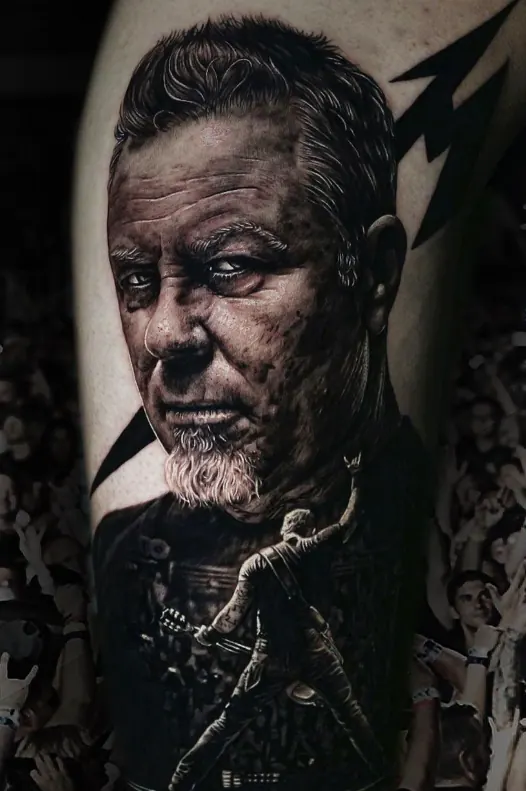
Aims to reproduce portraits, animals or objects faithfully, like a photograph on the skin. It demands great command of light, shadow and detail.
Key traits
- High level of detail
- Smooth gradients
- Black and grey or colour
Great for: Portraits, pets, scenes and medium or large pieces.
Old school (traditional)
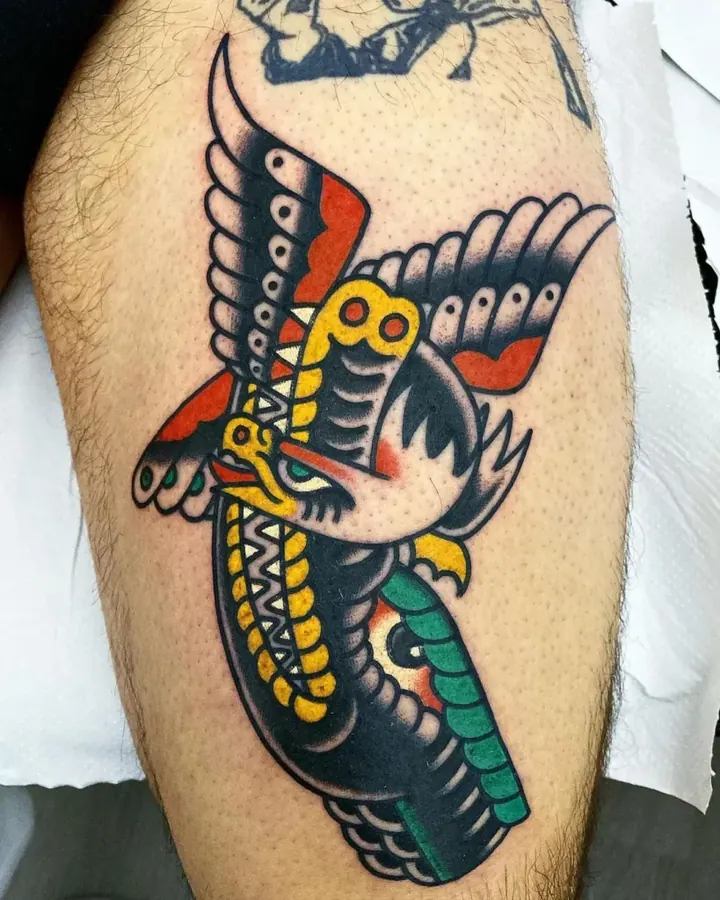
The classic tattoo: thick black outlines, a limited palette and motifs like eagles, anchors, roses or skulls. It is a style that ages very well.
Key traits
- Thick black outlines
- Flat, saturated colours
- Iconic motifs
Great for: Anyone after a timeless, highly readable design.
Neo-traditional
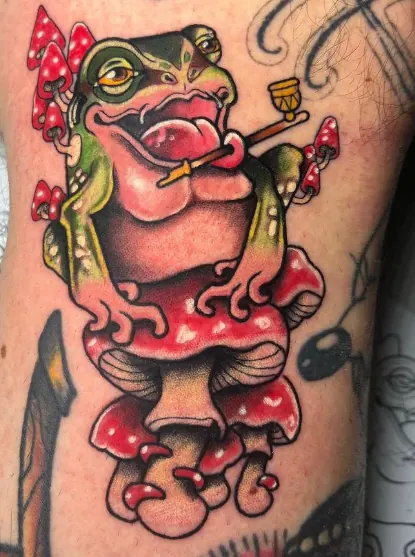
An evolution of traditional with more detail, a wider colour range and ornamental touches. It keeps bold outlines but adds shading and perspective.
Key traits
- Bold outline
- Wide palette
- Detailed illustration
Great for: Animals, flowers and characters with lots of personality.
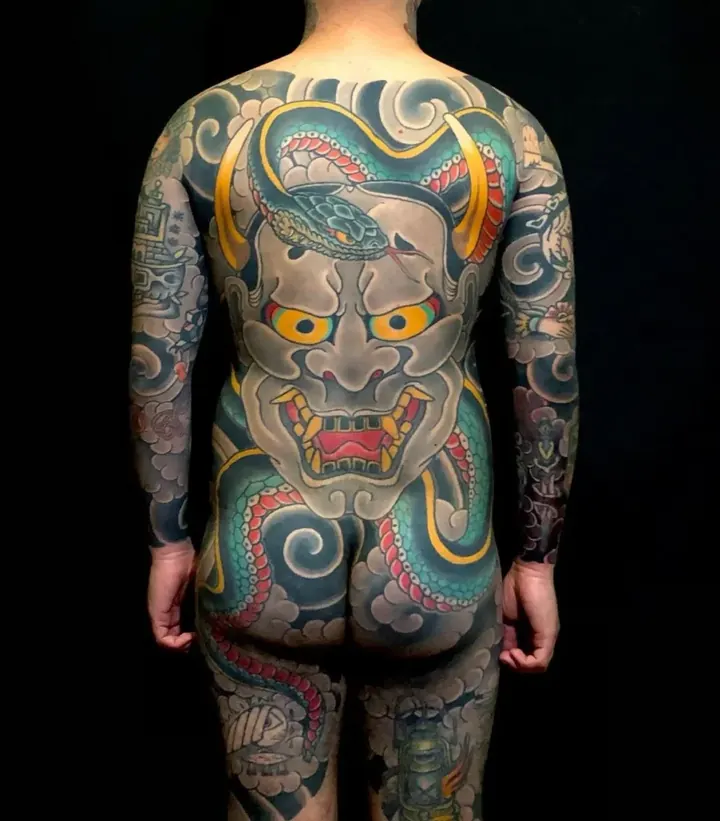
Japanese (irezumi)
A tradition with centuries of history: dragons, koi carp, cherry blossoms or waves, designed to flow with the body. Usually worked in large pieces such as sleeves or backs.
Key traits
- Composition that follows the body
- Wind, water and cloud backgrounds
- Cultural symbolism
Great for: Large projects with meaning.
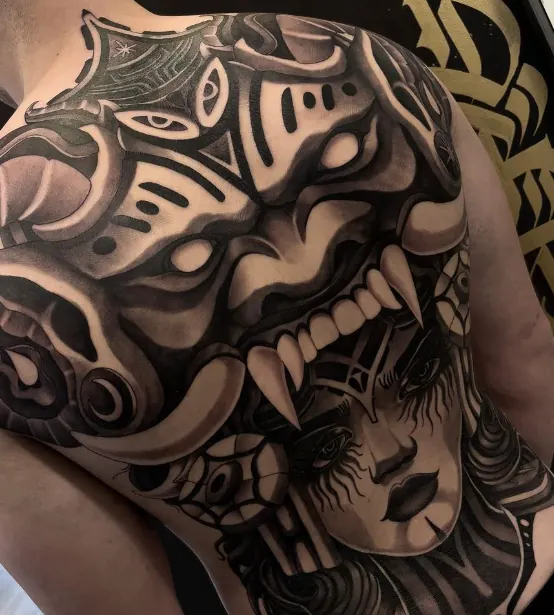
Blackwork
Done with black ink only, playing with contrast, solid black areas and illustrative or ornamental drawing.
Key traits
- Black ink only
- High contrast
- Graphic drawing
Great for: High-impact designs and covering older tattoos (ask your artist).
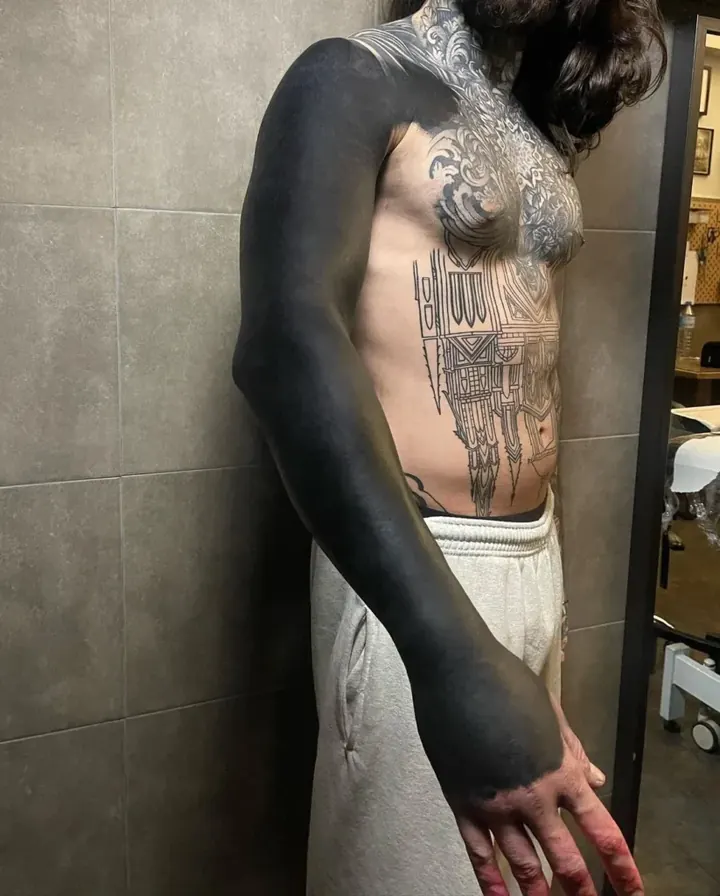
Blackout
Fully covers an area of skin in solid black, sometimes combined with small gaps or motifs in bare skin. It requires very even work.
Key traits
- Solid black
- Large areas
- Very striking
Great for: Those after a radical look who know it is hard to change later.
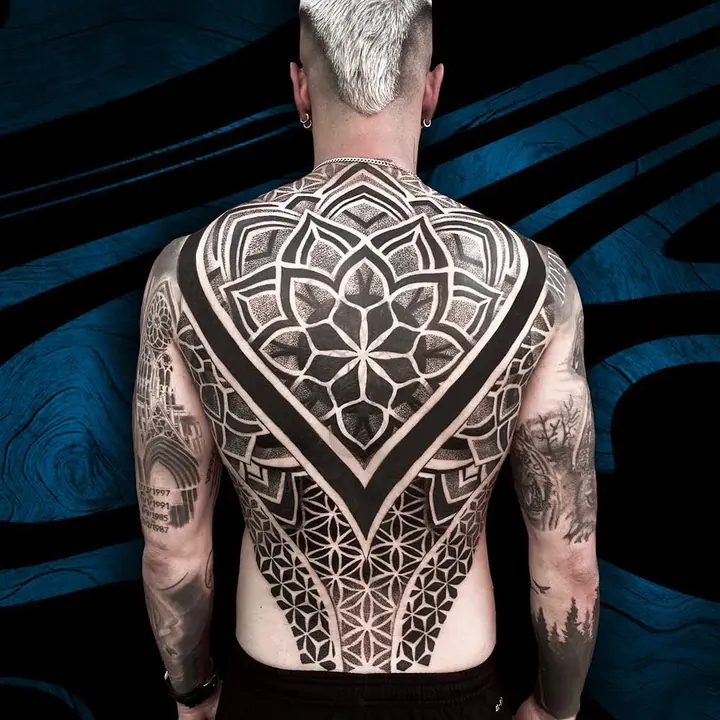
Geometric
Uses precise lines, symmetry and patterns, such as mandalas, sacred geometry or ornamental designs. Line cleanliness is key.
Key traits
- Symmetry and precision
- Repeating patterns
- Very clean line
Great for: Pieces that follow the anatomy, such as backs, chests or arms.
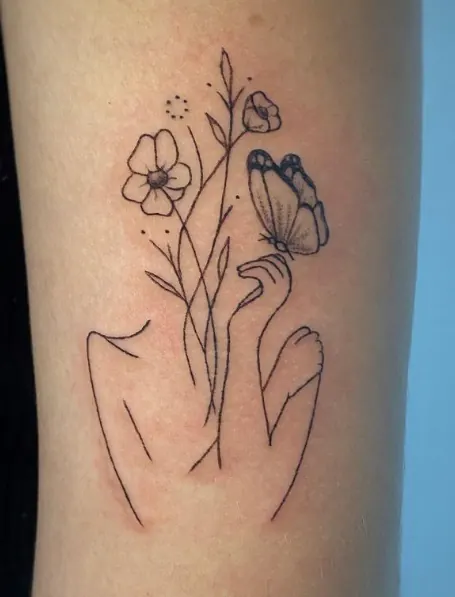
Minimalist (fine line)
Simple designs with fine strokes and few elements: flowers, silhouettes, quotes or symbols. Delicate and discreet.
Key traits
- Fine line
- Low detail
- Small or medium size
Great for: First tattoos and discreet pieces. Ask your artist how fine line will age.
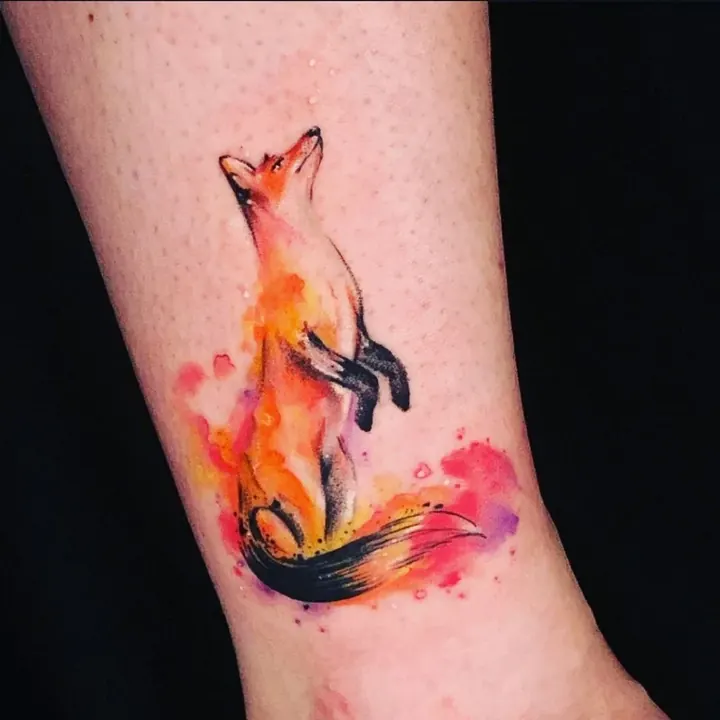
Watercolour
Imitates the washes, gradients and splashes of watercolour painting, with or without a black outline.
Key traits
- Colour gradients
- Painted effect
- With or without outline
Great for: Artistic, colourful designs. Look for an artist experienced in colour.
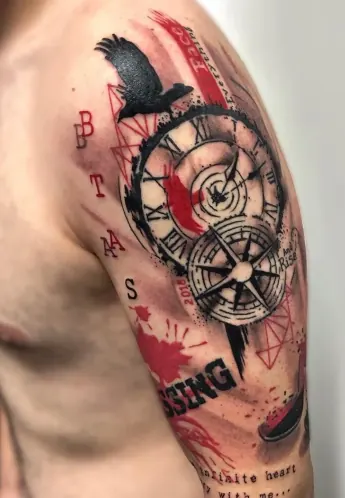
Trash polka
Mixes black-and-grey realism with red splashes, lettering and graphic elements in a chaotic, expressive collage.
Key traits
- Black and red
- Collage of elements
- Lettering and loose strokes
Great for: Those after a very personal, visually powerful piece.
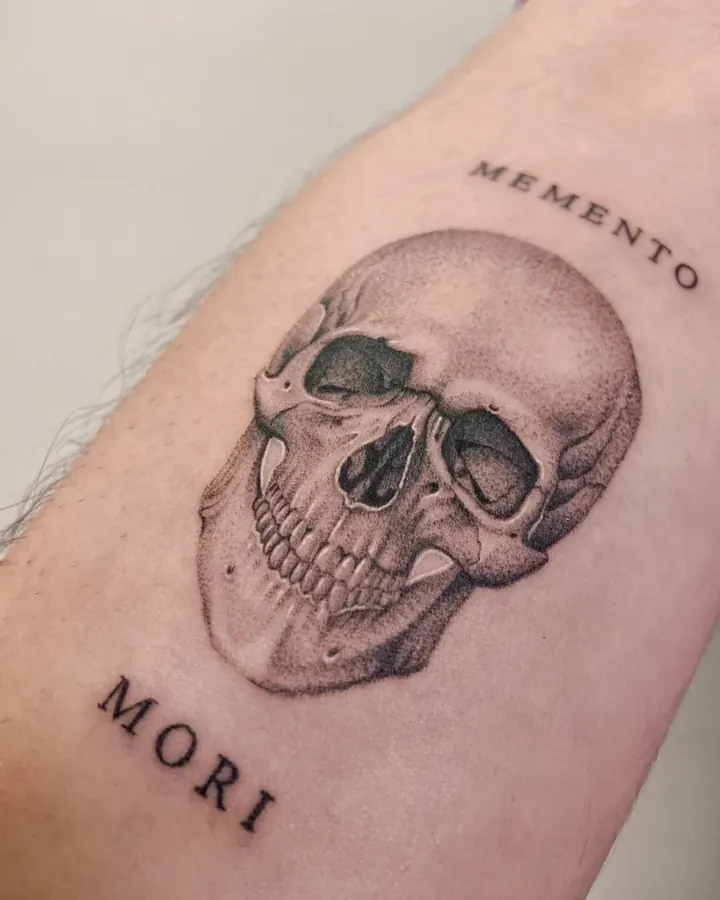
Dotwork (stippling)
Builds the image from dots: dot density creates the shading and shapes.
Key traits
- Dot shading
- Soft texture
- Highly detailed
Great for: Mandalas, animals and textured pieces.
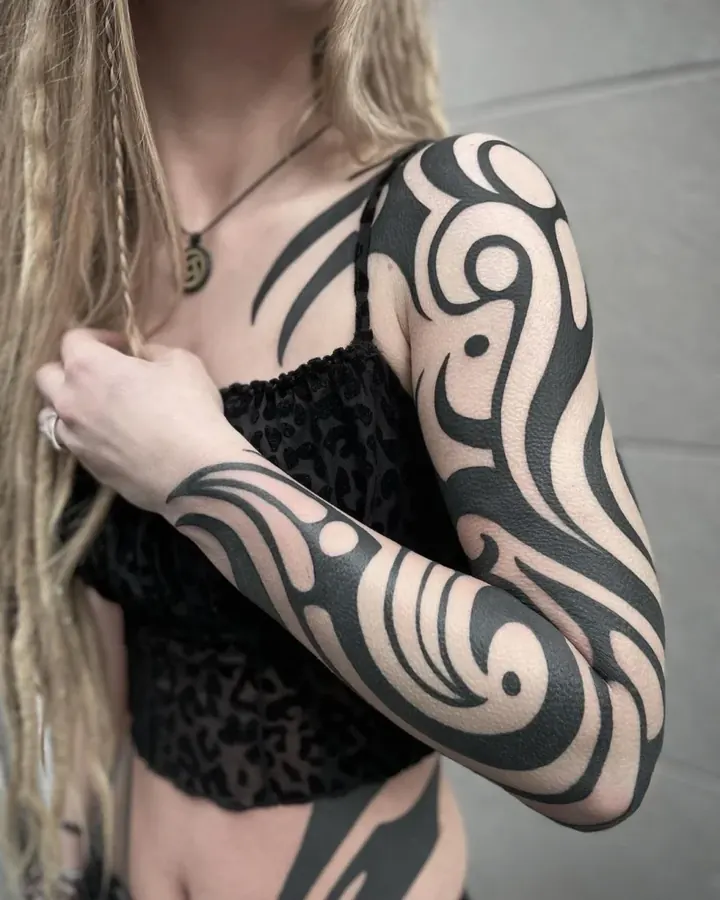
Tribal
Solid black shapes and patterns inspired by ancestral cultures, with curves that follow the muscle. Today it sits alongside modern takes.
Key traits
- Solid black
- Flowing shapes
- Wrapping patterns
Great for: Arms, legs and shoulders. Learn about the cultural origin of the motifs you choose.
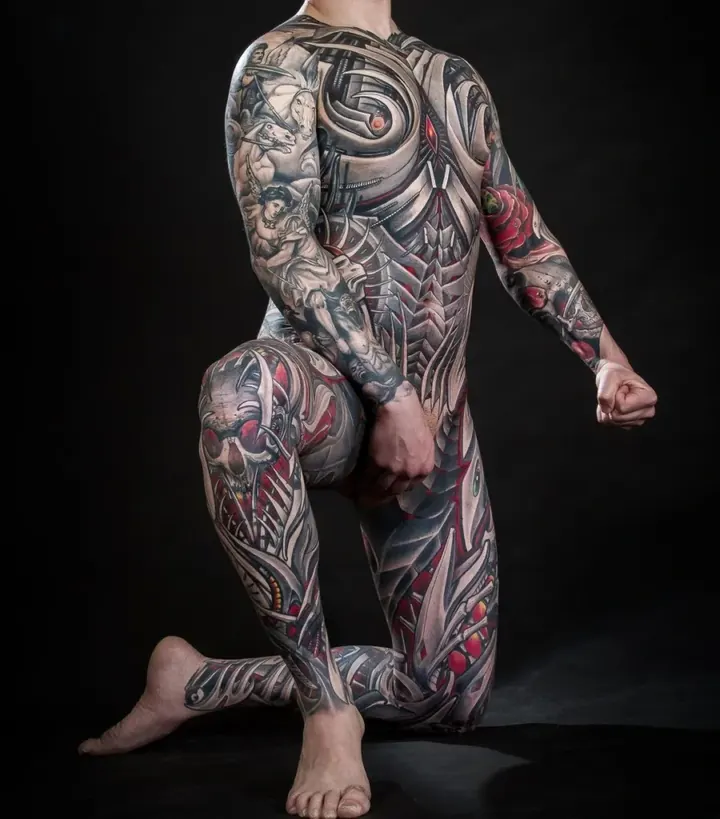
Biomechanical
Makes it look as if gears, tubes and mechanical parts lie beneath the skin, playing with anatomy and the illusion of depth.
Key traits
- 3D effect
- Mechanical parts
- Follows the muscle
Great for: Large pieces that follow the body shape.
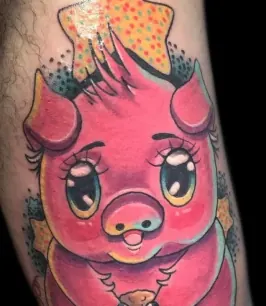
Kawaii
Cute, colourful characters inspired by Japanese culture, with big eyes and rounded shapes.
Key traits
- Bright colours
- Rounded shapes
- Illustrated look
Great for: Anyone after a cheerful, fun tattoo.
This guide is informational and does not replace the advice of your artist or a healthcare professional.